GUIDE Sleep • Illness • Reflection

Fever Dream Meaning: Why Sick Dreams Feel So Strange

Fever dreams are usually intense, fragmented dreams that happen when illness, higher body temperature, and disrupted sleep change how your brain moves through the night. This guide explains the meaning without treating the dream as a prediction or medical diagnosis.

Short answer

What does a fever dream mean?

A fever dream usually means your sleeping brain is trying to process discomfort, stress, temperature changes, and broken rest. The dream may feel surreal, repetitive, frightening, or physically strange because illness can make sleep lighter and more interrupted.

The safest interpretation is practical: the dream is a signal to notice your body, rest, hydrate, and separate the dream image from real danger. It does not automatically mean bad luck, spiritual warning, or a hidden diagnosis.

If the dream includes a strong symbol such as being trapped, chased, floating, shrinking, or seeing distorted rooms, treat that symbol as a reflection prompt. Then check the real context: fever level, medication, sleep loss, anxiety, and whether symptoms need care.
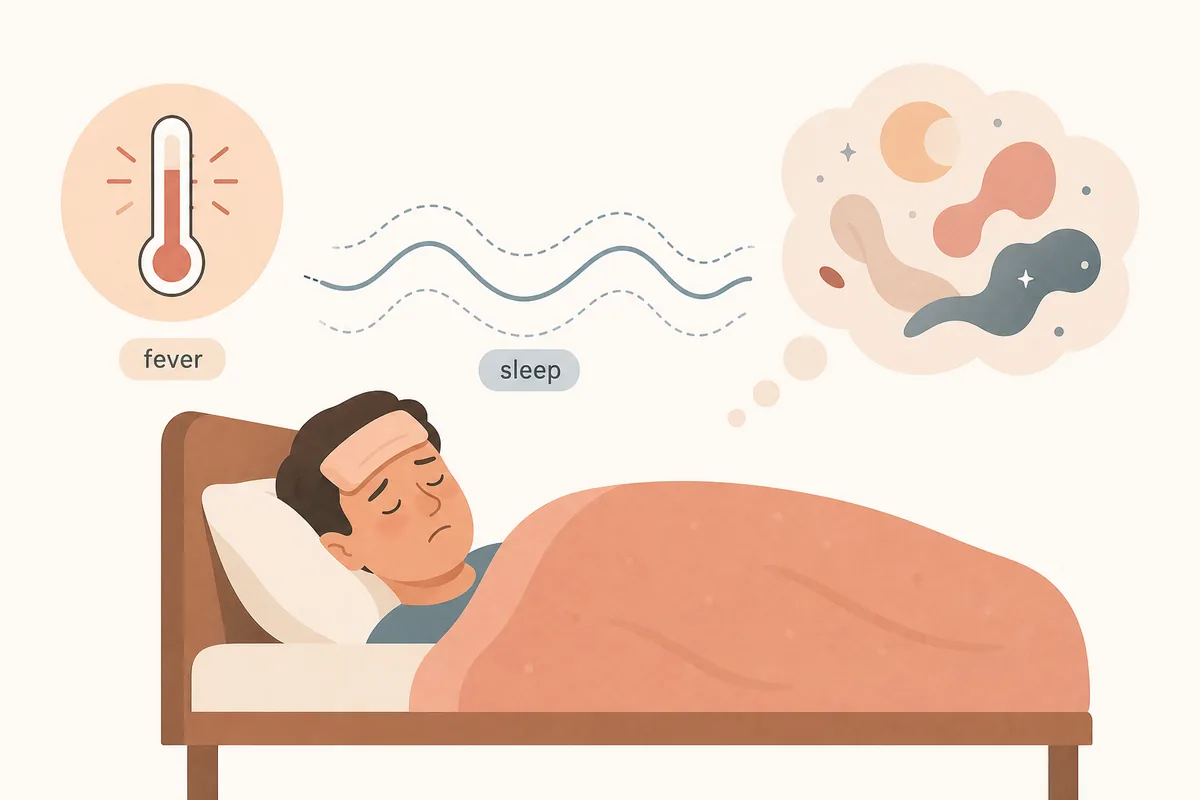
Calm editorial diagram of fever, sleep disruption, and a dream cloud
Fever dreams are best understood as illness-disrupted sleep plus emotional processing, not as literal predictions.

The fastest way to understand a fever dream

1

Start with the body

Ask whether fever, chills, pain, medication, dehydration, or sleep loss could explain why the dream felt more intense than usual.

2

Name the dream pattern

Fever dreams often include loops, distorted size, overheating, impossible spaces, pressure, or a sense that time is moving strangely.

3

Separate meaning from symptoms

Use the dream for reflection, but judge health risk by real symptoms and medical guidance, not by the dream storyline.

Fever dream signs and possible meanings

These patterns are common starting points. Match them with how your body felt before and after sleep.

Dream pattern Possible meaning Practical check
A looping or repeating dream Your sleep may be fragmented, so the brain keeps returning to the same image. Did you wake often, sweat, or check the time repeatedly?
A room feels huge, tiny, or distorted Illness and stress can change body awareness and spatial feeling in dreams. Were you dizzy, overheated, or uncomfortable in bed?
Being chased or trapped The dream may dramatize pressure, discomfort, or a wish to escape sickness. What symptom or worry felt hardest to get away from?
Heat, fire, or melting scenes The mind may be converting physical warmth or sweating into dream imagery. Was the room too warm, or did your fever rise overnight?
Confusing people or impossible conversations Interrupted REM sleep can leave dreams more fragmented and less logical. Did medication, coughing, or pain keep waking you?
A calm recovery scene The dream may reflect relief, comfort, or the body settling after a rough period. Did your symptoms improve after rest or fluids?

Why fever dreams happen

A fever dream is usually a sleep-and-body event first, then a symbol to reflect on second.

Higher body temperature

Fever changes the way your body feels during sleep. Heat, sweating, chills, or pressure can become dream images such as fire, tight rooms, heavy blankets, or strange movement.

Example: A dream about a hot hallway may simply echo overheating under blankets.

Interrupted sleep cycles

Illness often causes waking, tossing, coughing, or light sleep. When sleep breaks apart, dreams can feel unfinished, repetitive, or unusually vivid when you remember them.

Example: Waking every hour can make one dream scene feel like it keeps restarting.

Emotional processing under stress

Being sick can raise anxiety and vulnerability. The brain may turn that pressure into chase scenes, confusing tasks, or urgent problems that do not make sense after waking.

Example: A trapped dream during flu symptoms may mirror frustration rather than a real-life threat.

Medication and timing effects

Some people notice vivid dreams when illness changes sleep timing or when medications affect alertness, temperature, or rest. Do not stop prescribed medicine because of a dream; ask a clinician or pharmacist if you are concerned.

Example: A new nighttime medicine plus fever may make dream recall feel stronger.

Dehydration and discomfort

Dry mouth, headache, muscle aches, and dehydration can feed strange body sensations in dreams. The practical response is to support recovery, not to over-interpret every symbol.

Example: A dream of searching for water may match thirst during the night.

More dream recall after waking

You may remember fever dreams more because symptoms wake you during or near REM sleep. The dream can seem more important simply because it is remembered clearly.

Example: A vivid image after waking sweaty may stand out more than a normal forgotten dream.

What to do after a fever dream

Use the dream as a body check and reflection prompt, not as a prediction.

Step 1: Check your real symptoms first

Take your temperature if appropriate, notice hydration, breathing, pain, confusion, and whether symptoms are improving or worsening.

Step 2: Write the dream in one paragraph

Capture the main scene, emotion, and body feeling. Keep it short so you do not turn a feverish image into a fixed belief.

Step 3: Look for physical triggers

Consider heat, blankets, room temperature, medication timing, coughing, aches, hunger, or dehydration before choosing a symbolic meaning.

Step 4: Use calm recovery habits

Rest, drink fluids if allowed, keep the room comfortable, and avoid heavy late-night scrolling that can intensify anxious dream content.

Step 5: Get medical help when symptoms require it

Follow trusted medical guidance for high, persistent, or concerning fever symptoms. A dream itself is not the warning sign; real symptoms are.

Health note

What fever dreams can and cannot tell you

Fever dreams can tell you that your sleep was disrupted and that your mind is processing discomfort. They cannot diagnose an infection, predict the future, or prove that a specific symbol has one universal meaning.

Because this topic touches health, treat the article as general education. If fever is high, persistent, occurs in an infant, or comes with serious symptoms such as confusion, breathing trouble, stiff neck, severe headache, chest pain, dehydration, or a rash that worries you, use professional medical guidance promptly.

For dream interpretation, a fever dream is most useful after you are stable: compare the strongest image with your stress, vulnerability, and need for rest. If the dream is recurring even when you are well, then it may be worth exploring as a broader emotional pattern.

Helpful references

Sleep Foundation: Fever Dreams

Plain-language overview of fever dreams and why they may feel vivid or unusual.

Mayo Clinic: Fever treatment and when to seek help

General guidance for fever care and symptom-based escalation.

PMC: The effects of sleep and sleep loss on immunity

Research background on sleep, immune function, and illness context.

When to use the AI dream interpreter

Use AI after you have checked real symptoms and want to organize the dream imagery.

Situation What AI can organize What you still decide
A one-off fever dream Main symbols, emotions, and likely body-related triggers. Whether the physical explanation is enough.
A fever dream with strong symbols How heat, chase scenes, rooms, water, or family figures connect. Which connection matches your waking stress.
Recurring vivid dreams when not sick Patterns across several nights or life situations. Whether sleep habits or support should change.

Fever dream meaning FAQ

Are fever dreams a bad sign?

Usually no. A fever dream is more often a sign of disrupted sleep, body discomfort, and stress. Real symptoms, not the dream story, should guide health decisions.

Why are fever dreams so weird?

Fever, waking during the night, dehydration, discomfort, and stress can make dreams feel fragmented, vivid, repetitive, or physically strange.

Can medicine cause vivid dreams when I am sick?

Illness, changed sleep timing, and some medicines can all affect dream recall. Do not stop prescribed medicine because of a dream; ask a clinician or pharmacist if you are worried.

How do I stop fever dreams?

You may reduce them by supporting recovery: keep the room comfortable, hydrate when appropriate, rest, and follow medical advice for fever. If symptoms are severe or persistent, seek medical guidance.

Is a fever dream the same as a nightmare?

Not exactly. A nightmare is defined by frightening dream content. A fever dream can be scary, but it is linked to being ill and may also feel surreal, looping, hot, or distorted rather than purely fearful.