GUIDE Sleep • Emotion • Dream Recall

Vivid Dreams Meaning: Why Dreams Feel So Real

Vivid dreams are intense, memorable dreams that can feel unusually clear, emotional, or realistic after waking. This guide explains their meaning through sleep, stress, memory, and symbolism without treating the dream as a diagnosis or prediction.

Short answer

What does a vivid dream mean?

A vivid dream usually means your brain remembered a dream with unusually strong imagery, emotion, or body sensation. The dream may feel important because you woke during the right sleep window, felt stressed, slept irregularly, or carried a strong emotion into the night.

The safest interpretation is balanced: vivid dreams can reflect emotional processing, recent memories, disrupted sleep, pregnancy, illness, medication timing, or ordinary REM dream recall. They do not automatically predict the future or prove that one symbol has a universal meaning.

Start with the context before the symbol. Ask what changed in your sleep, stress, schedule, health, or relationships. Then interpret the dream scene as a reflection prompt rather than a literal message you must obey.

Calm illustration of a sleeping person with vivid dream fragments and sleep cycle icons
Vivid dreams become memorable when strong imagery, emotion, REM sleep, and waking recall meet.

The fastest way to understand a vivid dream

1

Check why you remembered it

Vivid dreams often stand out because you woke during or near REM sleep, slept lightly, or had repeated awakenings.

2

Name the strongest emotion

Fear, longing, grief, excitement, shame, or relief usually tells you more than the literal objects in the dream.

3

Interpret after the body check

Consider stress, sleep loss, alcohol, illness, pregnancy, medication changes, or late-night content before assigning deep symbolic meaning.

Vivid dream causes and what they may mean

Use this table to separate practical sleep triggers from symbolic reflection.

Pattern Possible meaning Best next check
A dream feels like a movie Strong REM imagery plus waking recall may make the dream feel unusually complete. Did you wake suddenly or remember many sensory details?
The dream is emotional but not scary Your mind may be processing stress, desire, grief, or an unresolved conversation. What feeling stayed with you after waking?
The dream repeats across several nights A recurring pressure, routine, or concern may be returning because it has not been processed. Is the same emotion present in waking life?
Vivid dreams after poor sleep REM rebound after sleep loss can make dreams feel more intense. Have you been sleeping less or changing your schedule?
Vivid dreams during illness or pregnancy Body changes and sleep disruption can increase dream intensity and recall. Are symptoms, hormones, discomfort, or awakenings affecting sleep?
Vivid nightmares that disturb the day Frequent distressing dreams can affect sleep quality and may deserve professional support. Are nightmares recurring, traumatic, or impairing daytime life?
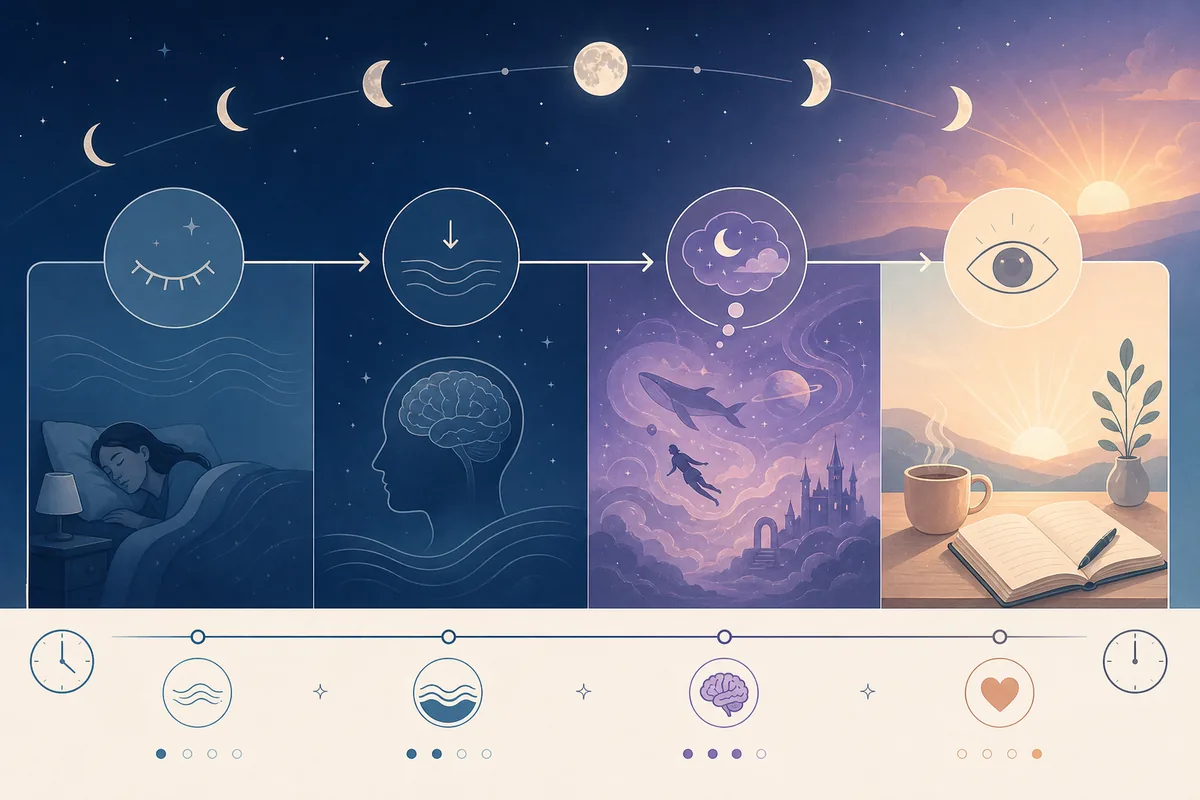
Editorial timeline of sleep stages, vivid dream recall, and morning reflection
Waking during or near a dream can make the scene feel sharper, longer, and more meaningful than ordinary forgotten dreams.

How to interpret vivid dreams without overreading them

A vivid dream is not automatically more true than a quiet dream. It is more memorable, so it deserves careful context.

High-detail dream recall

Vivid dreams often feel meaningful because you remember color, sound, movement, and emotion. The detail may come from waking close to the dream rather than from a special message.

Example: Remembering a bright room and exact dialogue may reflect a well-timed awakening.

Emotion made visible

The dream may turn pressure, attraction, grief, or uncertainty into scenes you can finally look at. Focus first on the emotion, then on the symbol.

Example: A vivid chase can show avoidance even when the person chasing you is not the real issue.

Disrupted or recovering sleep

Light sleep, insomnia, travel, illness, or catching up after sleep loss can make dream recall stronger. The meaning may be partly physical.

Example: A vivid dream after several short nights may reflect REM rebound.

Memory and problem sorting

Dreams may recombine recent memories, unfinished tasks, and older associations. A vivid scene can be the mind sorting material, not a command.

Example: A school dream before a work deadline may be about evaluation pressure.

Medication, alcohol, or substances

Some medicines, supplements, alcohol changes, or withdrawal patterns may affect REM sleep or dream recall. Ask a clinician before changing prescribed medication.

Example: A new nighttime routine plus vivid dreams is worth noting in a sleep log.

Spiritual or symbolic reflection

If you use spiritual interpretation, keep it humble and grounded. A vivid dream can be a prompt for prayer, journaling, or reflection, but it should not override real-world judgment.

Example: A vivid water dream may invite emotional reflection while still needing context.

What to do after a vivid dream

Use the dream while it is fresh, but keep interpretation grounded.

Step 1: Write three facts and one feeling

Record where you were, who appeared, what changed, and the emotion that lingered. This keeps the memory clear without turning it into a fixed belief.

Step 2: List practical triggers

Note sleep time, caffeine or alcohol, illness, stress, pregnancy, medication changes, scary media, or unusual wake-ups.

Step 3: Choose the central symbol

Pick one symbol or scene instead of interpreting everything. Ask what it represented in this dream, not what it always means everywhere.

Step 4: Compare nearby dream guides

If the dream included falling, water, snakes, teeth, or a specific person, use the matching guide to refine the scene.

Step 5: Seek help for distressing patterns

If vivid nightmares are frequent, trauma-related, or affecting daytime life, consider a qualified sleep or mental health professional.

Sleep note

When vivid dreams are normal and when to pay attention

Vivid dreams are common. They can happen after stress, sleep disruption, illness, pregnancy, grief, intense media, travel, or a simple night when you woke near a dream. Many vivid dreams fade without needing action.

Pay more attention when vivid nightmares repeat, cause fear of sleep, lead to daytime impairment, or involve acting out dreams physically. Those patterns are about sleep quality and safety, not just symbolism.

This guide is general education, not medical advice. If you suspect a medication side effect, sleep disorder, trauma response, or mental health concern, use professional guidance rather than changing treatment on your own.

Helpful references

Sleep Foundation: Vivid Dreams

Overview of vivid dream causes including sleep disruption, stress, pregnancy, medications, and REM rebound.

Sleep Foundation: Dreams and REM sleep

Plain-language background on dreams, REM sleep, dream recall, and sleep quality.

Cleveland Clinic: Nightmare Disorder

Medical overview for repeated vivid nightmares that cause distress or impairment.

How the AI dream interpreter can help

Use the tool to organize the full scene after you have checked the practical sleep context.

Situation What AI can organize What you still decide
A one-off vivid dream Symbols, emotion, setting, and possible waking-life links. Whether sleep disruption explains most of it.
A vivid dream with a strong symbol How the main symbol interacts with people, places, and emotion. Which interpretation feels grounded in your life.
Repeated vivid dreams Patterns across several nights and related themes. Whether the pattern needs lifestyle change or professional support.

Vivid dreams meaning FAQ

Are vivid dreams trying to tell me something?

Sometimes they can point to stress, emotion, memory, or a symbol worth reflecting on. But a dream being vivid does not automatically make it prophetic or literally true.

Why are my dreams suddenly so vivid?

Common reasons include waking during REM sleep, stress, sleep loss, schedule changes, illness, pregnancy, medication changes, alcohol changes, or more dream journaling and recall.

Are vivid dreams the same as nightmares?

No. A vivid dream is strongly remembered and detailed. A nightmare is distressing or frightening. A vivid dream can be pleasant, strange, neutral, or scary.

Can vivid dreams affect sleep quality?

Occasional vivid dreams are usually normal. Frequent disturbing dreams can fragment sleep or make you anxious about sleeping, especially if they repeat or affect daytime mood.

How can I stop vivid dreams?

You may not need to stop them unless they are distressing. A steady sleep schedule, calming bedtime routine, less late-night alcohol or intense media, stress support, and medical guidance for recurring nightmares can help.