GUIDE Patterns • Stress • Dream Recall

Recurring Dreams Meaning: Why the Same Dream Repeats

Recurring dreams are dreams that repeat the same story, place, person, threat, or emotional pattern across nights. They often point to a repeated concern, unfinished emotion, habit, or sleep disruption, but they should be read as reflection prompts rather than predictions.

Short answer

What does it mean if you have recurring dreams?

A recurring dream usually means your mind is returning to a pattern it has not fully processed. The repeated part might be a place, a person, a threat, an unfinished task, a feeling, or the same ending. The most useful question is not only what the symbol means, but why this exact pattern keeps coming back.

Common triggers include stress, avoidance, grief, relationship tension, major decisions, sleep fragmentation, repeated media, or a body state that keeps waking you at a similar point in the night. The dream can feel mysterious, but the pattern often becomes clearer when you compare several versions instead of interpreting one night in isolation.

Use recurring dreams carefully. They can support self-reflection, journaling, prayer, therapy conversations, or problem solving. They do not prove that something will happen. If the dreams are frightening, trauma-related, or affecting sleep and daily life, treat that as a sleep and wellbeing signal, not just a symbol to decode.

Editorial illustration of a sleeping person with repeated dream symbols forming a loop
Recurring dreams usually become useful when you compare the repeated pattern with sleep, stress, emotion, and waking-life context.

The fastest way to read a recurring dream

1

Compare versions, not one scene

Write down what stays the same across nights: location, person, threat, missing object, ending, and emotion.

2

Name the returning emotion

Recurring dreams usually repeat a feeling first. Anxiety, pressure, grief, guilt, longing, or helplessness may matter more than the literal plot.

3

Look for the waking-life loop

Ask where the same pattern appears while awake: procrastination, conflict, boundary issues, uncertainty, or a decision you keep delaying.

Recurring dream patterns and likely interpretation

Use the pattern to choose the right next step instead of forcing one universal meaning.

Repeated pattern Possible meaning Best next check
Same place every time A familiar emotional setting may be returning, such as work pressure, family roles, school memories, or a place linked to safety or fear. What does that place make you feel when awake?
Same person keeps appearing The person may represent the relationship, an unresolved conversation, grief, attraction, comparison, or a quality you associate with them. Is the dream about the actual person or what they symbolize?
Being chased or unable to escape Avoidance, pressure, fear, or unfinished responsibility may be repeating. What are you avoiding or postponing this week?
Repeating failure or lost item The dream may mirror worry about preparation, identity, control, or communication. Where do you feel unprepared or unable to say what you mean?
Same nightmare with daytime distress The dream may be affecting sleep quality and deserves more support than symbolic interpretation alone. Is it trauma-linked, frequent, or changing how you sleep?
Recurring dream fades after action A small waking-life change may reduce the emotional loop. What changed before the dream became less frequent?
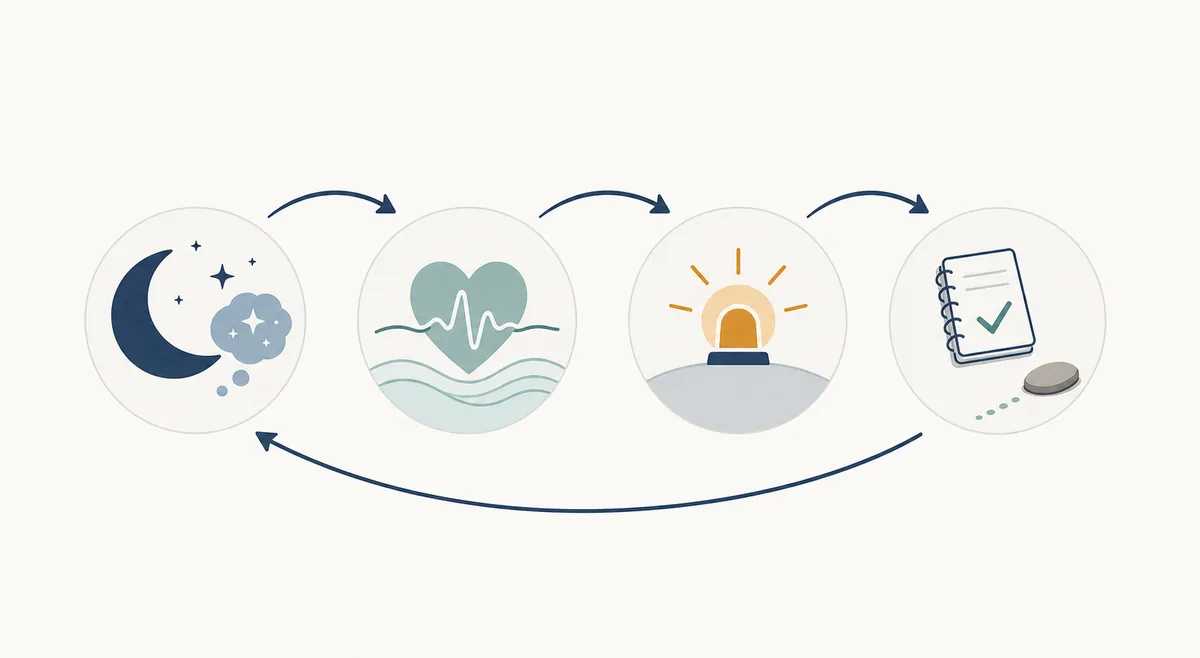
Simple loop diagram showing dream recall, repeated emotion, waking trigger, and next action
A repeating dream is easier to interpret when you track the loop: what repeats, what emotion returns, what trigger may be active, and what small action is possible.

Common meanings of recurring dreams

The same dream can mean different things for different people. Start with the repeated emotion, then use the symbol as a clue.

An unfinished emotional pattern

A repeated dream often shows an issue that keeps returning because it has not been named, accepted, solved, or grieved. The dream may be asking for attention, not instant action.

Example: Dreaming of missing a train may point to pressure about timing, opportunity, or feeling behind.

Avoidance or pressure

Chase dreams, locked doors, missed exams, and endless corridors often fit a waking loop where you feel pursued by a task, fear, conflict, or expectation.

Example: The pursuer may be less important than the feeling of never catching your breath.

Grief, attachment, or relationship tension

Recurring dreams about an ex, family member, friend, or deceased person can reflect memory, longing, unfinished words, or changing identity after a relationship shift.

Example: A recurring dream about someone may need the relationship context more than a symbol dictionary.

Sleep timing and dream recall

Repeated awakenings can make similar dreams easier to remember. Stress, illness, alcohol changes, or irregular sleep may strengthen dream recall.

Example: A recurring dream that appears during poor sleep may partly be a sleep-pattern issue.

A values or decision conflict

Some repeating dreams appear when you keep choosing between safety and change, duty and desire, honesty and avoidance, or independence and belonging.

Example: A recurring doorway dream may ask what choice you keep circling.

A wellbeing signal

Frequent distressing dreams, especially nightmares, can reduce rest. If the dream causes fear of sleep or daytime impairment, professional support may be more useful than more interpretation.

Example: Recurring trauma-related nightmares deserve care beyond a quick dream meaning.

What to do after recurring dreams

A simple seven-day pattern check can make the dream easier to understand.

Step 1: Keep a short dream log

For one week, record the date, wake time, repeated scene, strongest emotion, and one thing that happened the previous day.

Step 2: Circle what repeats

Separate repeating elements from changing details. The repeated emotion or ending is usually more important than one new object.

Step 3: Name the waking parallel

Write one sentence that starts with: This feels like the part of my life where I keep... Then complete it honestly.

Step 4: Take one small action

Try a concrete response: finish a postponed task, set a boundary, schedule a conversation, rest earlier, or reduce a trigger before bed.

Step 5: Use AI for pattern organization

Paste two or three versions of the dream into the interpreter and ask for shared patterns, differences, and grounded reflection questions.

Step 6: Get help when distress repeats

If recurring nightmares are linked to trauma, panic, fear of sleep, or daytime impairment, consider a qualified sleep or mental health professional.

Safety note

When recurring dreams are normal and when to pay attention

Recurring dreams are common and often become more noticeable during stress, transitions, grief, exams, conflict, travel, illness, or irregular sleep. Many fade when the waking-life pressure changes or when you respond to the underlying issue.

Pay closer attention when the dream is a repeated nightmare, causes fear of sleep, includes trauma memories, leads to exhaustion, or affects work, relationships, or mood. In those cases, the important question is not only what the dream means, but how it is affecting your rest and safety.

This guide is general education and reflection support. It is not medical or mental health advice. Do not change medication, ignore symptoms, or treat a dream interpretation as a diagnosis.

Helpful references

Sleep Foundation: Recurring Dreams

Overview of repeated dream themes, possible stress links, and reflection strategies.

Sleep Foundation: Dreams

Background on dreams, REM sleep, recall, and why remembered dreams can feel meaningful.

Cleveland Clinic: Nightmare Disorder

Medical context for repeated distressing nightmares that affect sleep or daytime life.

How the AI dream interpreter can help with recurring dreams

Use the tool to compare versions and keep the interpretation grounded.

Input What AI can organize What you still decide
Two or three versions of the same dream Repeated characters, settings, emotions, endings, and symbolic themes. Which pattern best matches your waking life.
A recurring nightmare Threat themes, stress links, and reflection questions. Whether distress is strong enough to seek support.
A dream that changed recently What stayed the same and what shifted after a life change. Whether a waking action helped the pattern loosen.

Recurring dreams meaning FAQ

Are recurring dreams trying to tell me something?

They may be pointing to a repeated emotion, stress pattern, relationship issue, unfinished task, or sleep disruption. Treat the dream as a reflection prompt, not a guaranteed message or prediction.

Why do I keep having the same dream?

Common reasons include unresolved stress, avoidance, grief, repeated reminders, irregular sleep, waking during similar dream stages, or a problem your mind keeps rehearsing.

Do recurring dreams mean trauma?

Not always. Many recurring dreams are ordinary stress dreams. But recurring nightmares linked to trauma, panic, or daytime impairment deserve professional support.

How do I stop recurring dreams?

You may not need to stop them unless they are distressing. A short dream log, better sleep routine, reduced triggers, problem-solving, and support for repeated nightmares can help.

Should I interpret every repeated symbol the same way?

No. The same symbol can change meaning depending on emotion, setting, action, and your personal context. Compare the full pattern before deciding what it means.