A loss of control
Cars combine movement, speed, direction, and responsibility. A crash may mirror a waking situation that feels faster or less manageable than you expected.
Example: You keep agreeing to new commitments, then dream that the brakes fail on a steep road.
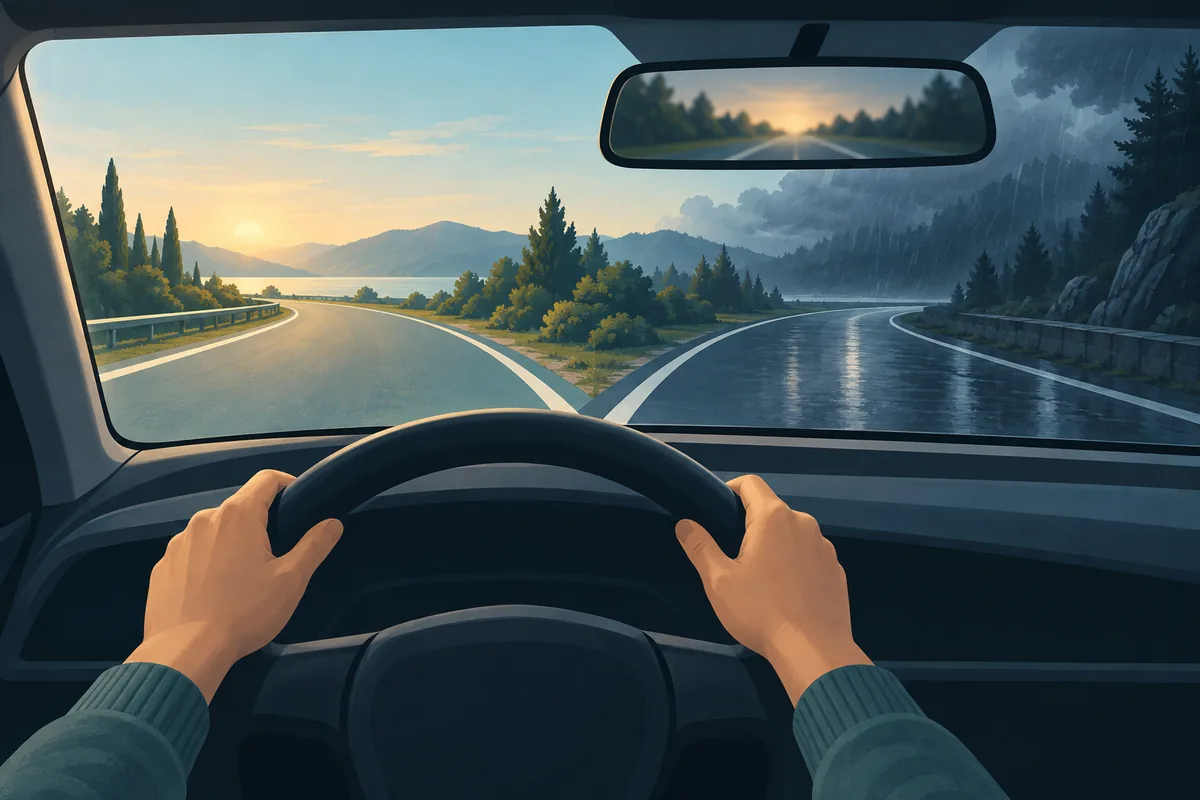
A difficult change of direction
An accident can mark a sudden turn: leaving a job, changing a relationship, moving, starting over, or realizing that the old route no longer fits.
Example: A collision at an intersection may appear while you are comparing two major options.
Responsibility and guilt
If you were driving or caused the accident, the dream may be processing responsibility, fear of disappointing someone, or regret about a recent choice. It is not proof that you are a bad person.
Example: You miss a turn in the dream after worrying that a real mistake affected a colleague.
Fear of consequences
The crash may give shape to a fear that one decision will create damage. This is especially common when the dream focuses on impact, witnesses, insurance, or explaining what happened.
Example: A minor waking disagreement becomes a dream about a much larger chain reaction.
Relationship tension
When another person is driving, the accident can reflect trust, dependence, boundaries, or different ideas about where a relationship is going.
Example: You feel unsafe in the passenger seat because you cannot slow down or choose the route.
A body-level stress signal
Poor sleep, muscle tension, panic, real traffic stress, or recent exposure to frightening images can feed a realistic accident dream. Check the body and sleep context before making it symbolic.
Example: After several late nights and a difficult commute, you dream of headlights and sudden braking.
Recovery and repair
A dream that ends with help, a safe roadside, a repaired car, or a calm conversation may be less about disaster and more about learning how to recover after disruption.
Example: The car is damaged, but you call for help and walk toward a well-lit place.