GUIDE Death dreams • Scenarios • Reflection

Death Dream Meaning: What It Means When You Dream You Die

If you are wondering what it means when you die in your dream, start with context rather than fear. This guide separates common emotional themes from literal predictions and compares the most searched death-dream scenarios.

Short answer

What does it mean when you dream you die?

A dream about your own death rarely means that you or someone else will die. More often, the image gives a dramatic shape to an ending, identity change, loss of control, grief, or pressure that your mind is processing. The feeling in the dream usually matters more than the word death itself.

A peaceful death dream can feel like release or the closing of an old chapter. A terrifying dream may point to anxiety, helplessness, conflict, or fear of change. Dreaming that someone you know dies can reflect a changing relationship, a shifting role, or concern for that person without being a prediction about them.

Use this page as a reflection guide, not a fixed dream dictionary. Write down who died, what happened before the death, how you felt afterward, and what is changing in waking life. If the dream contains several symbols, the free AI dream interpreter can read the full pattern instead of isolating death from the rest of the scene.

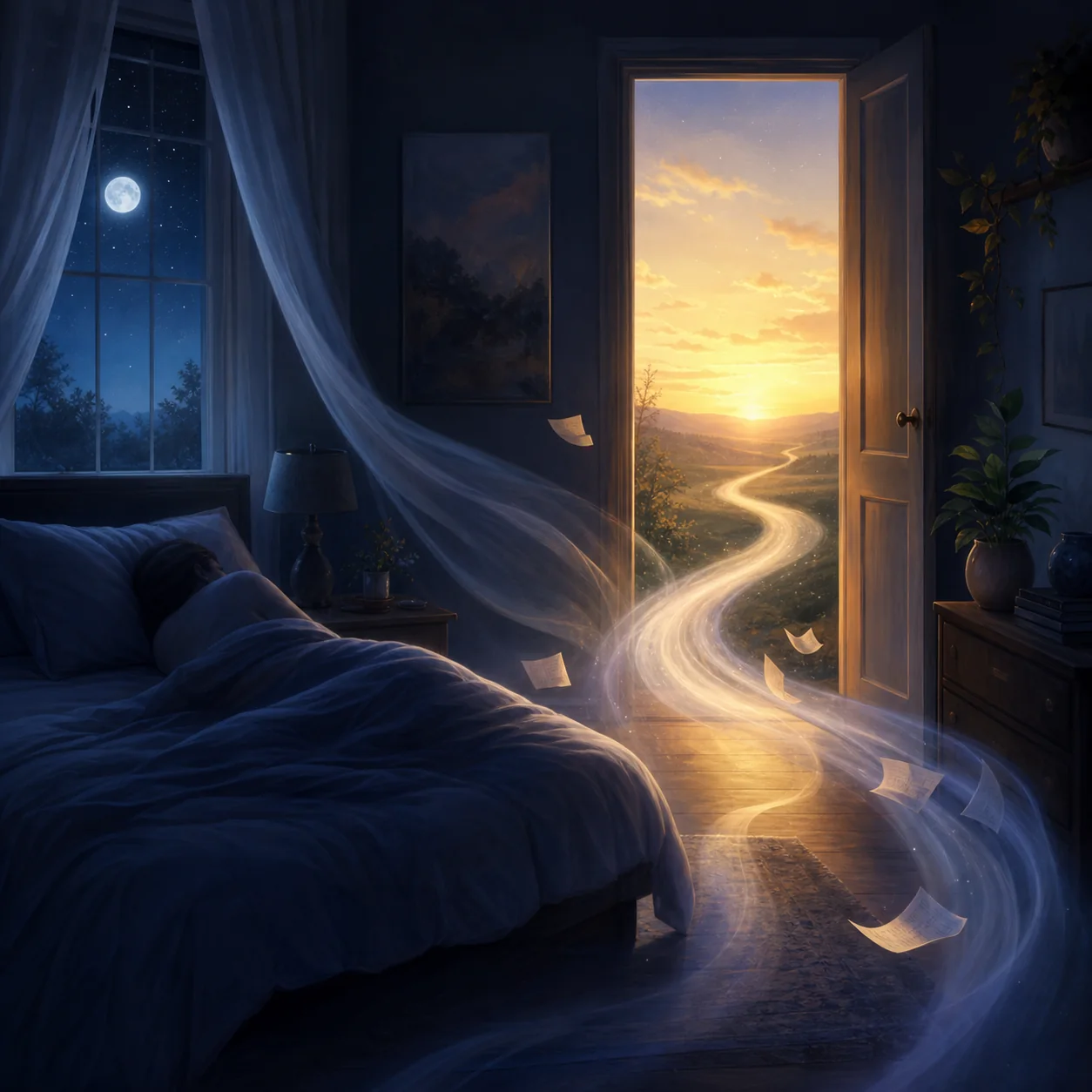
Moonlit bedroom opening toward a sunrise path, symbolizing change in a death dream
Death dreams are often easier to understand as images of transition, emotion, or closure than as literal forecasts.

The fastest way to read a death dream

1

Do not treat it as a prediction

Death in dreams is usually symbolic or emotional. There is no reliable reason to read one dream as proof that a real death is about to happen.

2

Notice what is ending or changing

A job, relationship pattern, identity, routine, belief, or life stage may be changing. The dream can dramatize that transition as death.

3

Let the emotion lead

Fear, grief, relief, numbness, guilt, and peace point to different questions. The emotional aftertaste is often more useful than a generic symbol list.

4

Check stress and repetition

A single vivid dream may follow stress or a strong memory. Repeated nightmares, trauma-linked dreams, or fear of sleeping deserve care beyond online interpretation.

Death dream scenarios and possible meanings

Use the scenario as a starting point, then adjust it by emotion, relationship, and current life context.

Dream scenario Possible reading Question to ask yourself
You die peacefully Release, acceptance, or the quiet end of an old chapter. What am I ready to stop carrying?
You die in fear or panic Loss of control, pressure, uncertainty, or fear of an unavoidable change. Where do I feel powerless or rushed right now?
Someone you know dies A changing relationship, role, boundary, or fear of losing connection; not a forecast about that person. What has changed between us, or what am I afraid could change?
You attend a funeral A need to acknowledge closure, grief, an ending, or a transition that has not been emotionally processed. What ending needs a more honest goodbye?
You keep dying and waking up A repeating stress loop, unresolved decision, or recurring nightmare pattern. What detail repeats, and what changes each time?
Death leads to a new place or body Identity renewal, experimentation, or a wish to begin again after a difficult phase. What new version of myself is trying to emerge?
You cannot save someone Helplessness, responsibility, grief, or limits around another person's choices. What am I trying to control that is not fully mine to control?
Open dream journal beside a sunrise window for reflecting on death dream meaning
Record the scene, emotion, and waking-life change before choosing an interpretation.

7 common interpretations of dreaming about death

Choose the interpretation that fits the whole dream. No single meaning applies to everyone.

A life transition

Death can symbolize the end of a role, routine, relationship pattern, or life chapter. The dream may appear when change is already underway but does not yet feel complete.

Example: Starting a new job while leaving an old identity behind may produce a dream of dying and entering a different place.

An identity shift

Dreaming that you are dead can represent an older version of yourself becoming less important. It may reflect new boundaries, values, confidence, or priorities.

Example: If the dream feels calm, it may fit the relief of no longer performing an outdated role.

Loss of control

A violent or sudden death dream can give form to helplessness. Deadlines, conflict, financial pressure, illness in the family, or an uncertain decision may all feed this theme.

Example: Being unable to move before the dream death may echo feeling stuck in a waking-life problem.

Relationship change

When another person dies in a dream, the subject may be the relationship rather than the person's physical safety. Distance, a new boundary, grief, or a changing role can appear as death.

Example: A friend moving away may appear in a dream about losing them even when the friendship is still meaningful.

Stress and threat processing

Some death dreams are intense stress images rather than messages that need decoding. Poor sleep, repeated worry, frightening news, and emotional overload can make dreams more dramatic.

Example: A stressful week may produce a death dream that fades once sleep and daily pressure settle.

Spiritual or moral reflection

Some people read death dreams through spiritual, religious, or ethical beliefs. That lens can be meaningful when it stays humble and does not turn the dream into a certain prophecy.

Example: A dream about a funeral may prompt reflection on forgiveness, priorities, or how you want to live now.

A decision that feels final

Death imagery can appear when a choice feels irreversible. The dream may be asking you to name what you fear losing, not telling you which decision to make.

Example: Leaving a long-term plan can feel like a symbolic death even when it opens a healthier direction.

How to interpret your own death dream

A grounded reading connects the image, emotion, relationship, and waking-life context.

Step 1: Write the exact scene

Record who died, how it happened, where you were, who witnessed it, and what happened immediately afterward. Small details often change the interpretation.

Step 2: Name the strongest emotion

Choose the feeling that stayed after waking: panic, grief, relief, guilt, curiosity, numbness, or peace. Do not skip this step.

Step 3: Look for a waking-life ending

Ask what is changing in your work, relationships, body, home, identity, plans, or beliefs. A symbolic ending usually has a real-life echo.

Step 4: Separate fear from evidence

A frightening dream can feel certain, but intensity is not proof. Avoid making urgent decisions or alarming someone because of one dream.

Step 5: Read the full pattern

If the dream also contains water, a house, a chase, a family member, or a repeated place, interpret those elements together rather than assigning one fixed death meaning.

Evidence and limits

What a death dream can and cannot tell you

Dream interpretation is most useful as structured self-reflection. Sleep and dream research can help explain why dreams combine memory, emotion, sensory fragments, and recent concerns, but it does not support the idea that one symbol has one guaranteed meaning for every person.

Treat death dream meaning as a set of questions, not a diagnosis or prediction. If you are grieving, dealing with trauma, or worried about someone's health, the dream may amplify an existing fear. The dream itself cannot confirm a medical, spiritual, or future event.

If nightmares are frequent, make you afraid to sleep, follow a traumatic event, or interfere with daily life, consider speaking with a qualified mental-health or medical professional. An online guide can organize reflection, but it should not replace care when distress is persistent.

Trusted background reading

Sleep Foundation: Dreams

Accessible background on dreams, sleep stages, memory, emotion, and interpretation limits.

NINDS: Understanding Sleep

Official overview of sleep biology and why sleep is part of brain and body health.

PubMed: Sleep, dreaming, and emotional memory

A research search entry point for studies on dreaming, memory, and emotional processing.

When a full-dream interpreter is more useful

A death symbol rarely stands alone. Use the full scene when the dream includes several people, places, or emotions.

Question Use this guide for Use the AI interpreter for
One clear death symbol Compare the scenario, emotion, and transition themes on this page. Add the entire dream when the death image is only one part of a larger scene.
A person dies in the dream Reflect on relationship change without treating it as a forecast. Include the person's role, the setting, dialogue, and your feeling toward them.
A repeated nightmare Track recurring details and sleep-related stress. Compare several scenes and ask the tool to highlight patterns, while seeking support if distress continues.
Death plus water, a house, or a chase Open the matching symbol guide for a second lens. Interpret how the symbols interact instead of assigning separate dictionary meanings.

Death dream meaning FAQ

Does dreaming about death mean someone will die?

Usually no. Death dreams are commonly interpreted as images of endings, change, grief, pressure, or identity shifts. A dream is not reliable evidence that a real death is about to happen.

What does it mean when you die in your dream?

It may reflect a major transition, the end of an old role, loss of control, or fear of change. Start with your emotion and the part of life that currently feels different or unfinished.

What does it mean when someone you know dies in your dream?

The dream may reflect a changing relationship, distance, grief, concern, or a changing aspect of yourself. It does not automatically predict anything about that person's safety. For a person-centered reading, compare the dream about someone guide as well.

What does a funeral mean in a dream?

A funeral can symbolize closure, acknowledgment, grief, or a need to say goodbye to an old chapter. The people present and your emotional tone help distinguish sadness from relief or acceptance.

Why do I keep dreaming about dying?

Repeated death dreams can follow unresolved stress, a recurring life transition, grief, trauma, or a repeating nightmare pattern. Track the details that stay the same and consider professional support if the dreams disrupt sleep or daily life.

Can a death dream have a positive meaning?

Yes. A calm or hopeful dream can fit release, renewal, a new identity, or the completion of a difficult phase. Positive does not mean the dream is a supernatural message; it means the emotional pattern feels constructive to you.

Can you die in a dream?

People can experience dreams in which they die, wake up, or continue the story from another perspective. That question is about dream experience rather than death dream symbolism, so the evidence-based do-dreams-have-meaning guide is the better next read.

When should I get help for death nightmares?

Consider professional support when nightmares are frequent, linked to trauma, cause fear of sleep, bring intense daytime distress, or interfere with work and relationships. An online interpretation page is not a substitute for care.