Reflection prompt: Ask whether the dream fear resembles a current situation or only the intensity of the scene.
GUIDE
Themes • Causes • Safe reflection
Nightmare Meaning: Why We Have Nightmares and How to Reflect Safely
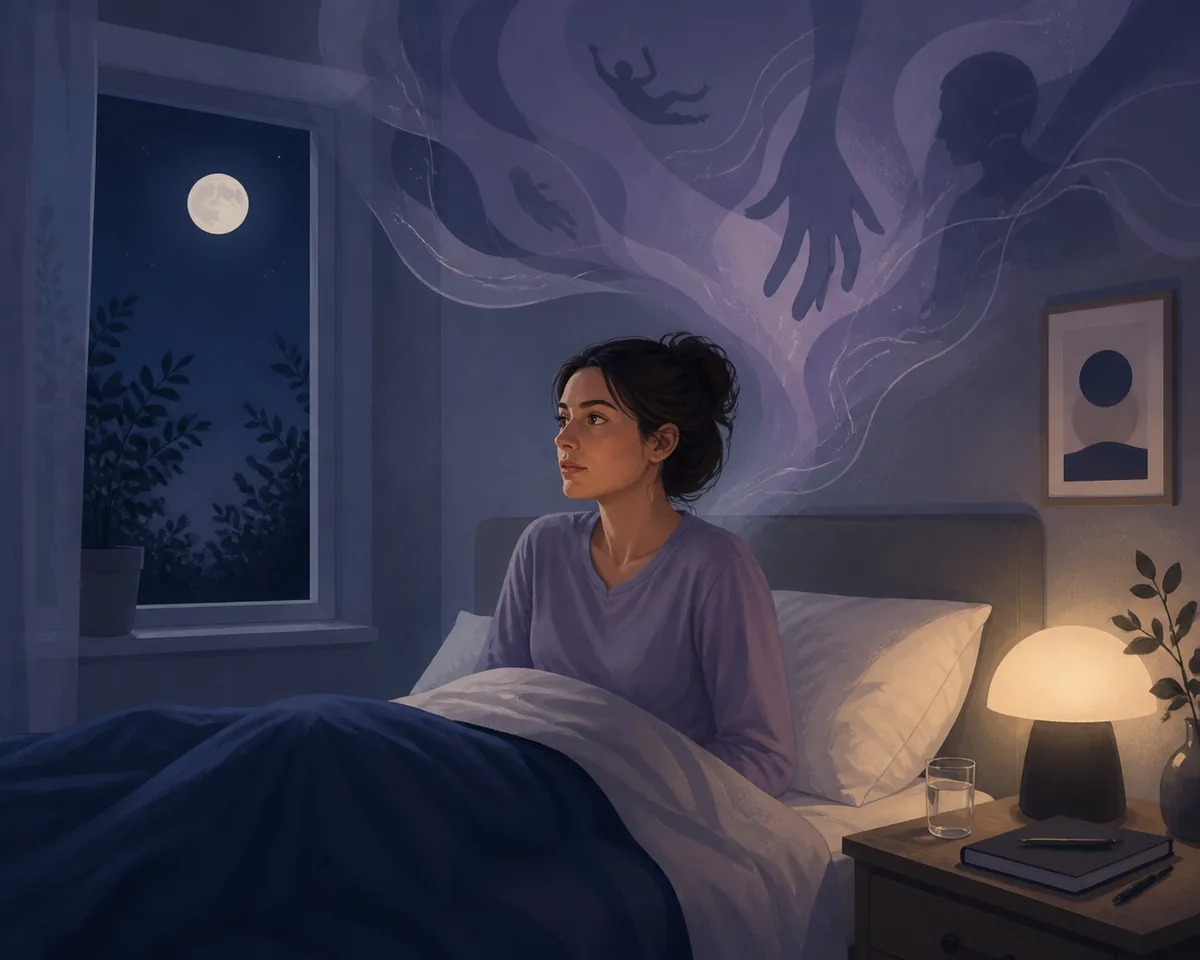
A nightmare can be a vivid expression of fear, pressure, loss of control, conflict, or a disrupted sleep pattern. This guide explains common themes without turning a dream into a fixed prediction or diagnosis.
Short answer
What does a nightmare mean?
The meaning of a nightmare is usually less about a universal symbol and more about the emotional pattern inside the dream. Feeling chased may connect with avoidance or pressure. Being trapped may mirror helplessness. A disaster scene may reflect overload or uncertainty. Those are possibilities for reflection, not guaranteed messages.
Nightmares also have ordinary sleep and body-related explanations. Stress, illness, irregular sleep, frightening media, medication changes, alcohol, trauma reminders, and waking during a vivid dream can all affect how intense a dream feels and how much of it you remember. A careful interpretation keeps these explanations beside symbolic ones instead of choosing a supernatural answer too quickly.
Use this page to organize the scene, the emotion, and the waking context. If the same nightmare returns, makes you afraid to sleep, follows a traumatic event, or affects your daytime life, the important question is not only what the nightmare means. It is also whether your sleep and wellbeing need practical or professional support.
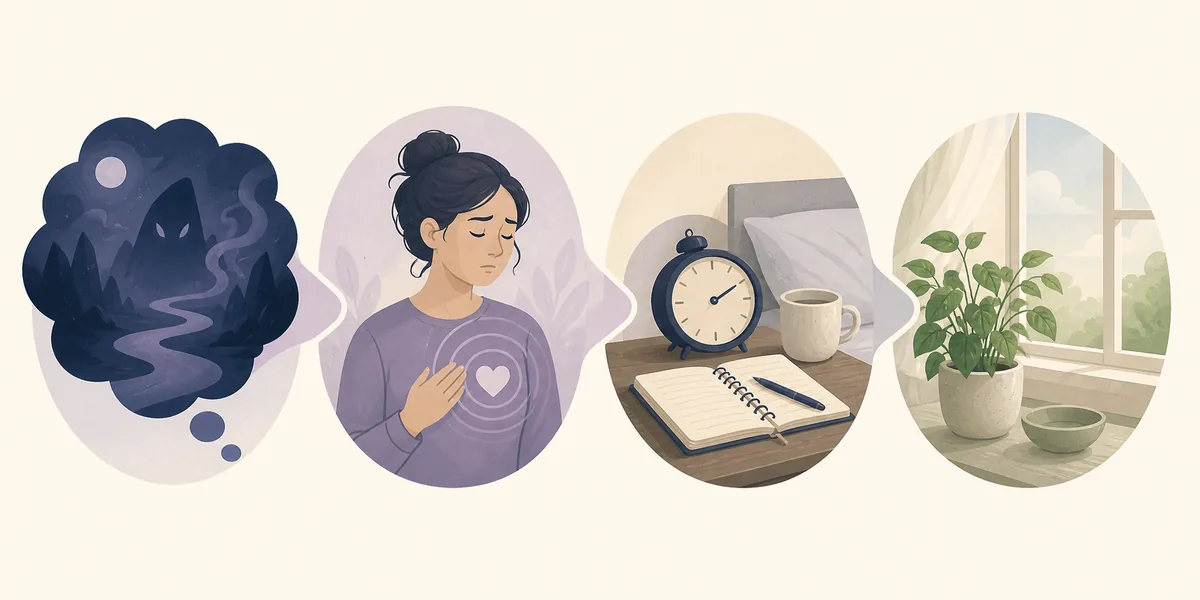
Four useful checks before interpreting a nightmare
1
Start with the feeling
Fear, shame, grief, anger, helplessness, and relief point toward different questions than the same image alone.
2
Read the whole scene
A snake, house, storm, or stranger can change meaning depending on what happened before and after it appeared.
3
Check waking context
Look at stress, conflict, health, sleep timing, recent media, and memories before assuming the dream predicts anything.
4
Notice impact
An occasional nightmare may need only reflection. Frequent distress, fear of sleep, or daytime impairment deserves extra support.
Nightmare meaning by common scenario
The same scenario can mean different things. Use the final question to connect the dream with your own context.
| Dream scenario | Possible reflection theme | Question to ask |
|---|---|---|
| Being chased | Avoidance, pressure, or a problem that feels close | What are you postponing, and what happens when you turn toward it? |
| Falling or losing control | Uncertainty, rapid change, or fear of failing | Where do you feel unable to steer the next step? |
| Being trapped or unable to speak | Helplessness, blocked communication, or a need for boundaries | What feels difficult to say, refuse, or change while awake? |
| Injury, death, or danger | Vulnerability, grief, identity change, or alarm | What changed recently, and what part of the dream felt most frightening? |
| Storms, fire, or natural disaster | Emotional overload, conflict, or instability | What pressure is bigger than your current coping space? |
| Waking repeatedly from the same nightmare | A recurring stress loop, sleep disruption, or unresolved fear | What detail repeats, and does the waking-life context repeat too? |
Common nightmare themes and what they may point toward
These are reflection fields, not a fixed dream dictionary. Let the emotion and personal context decide which theme is useful.
Reflection prompt: Look for the part of the dream where everything became too fast, too loud, or impossible to finish.
Reflection prompt: Separate what you can influence today from what you are trying to control too far ahead.
Reflection prompt: Focus on the emotion you felt around the person rather than treating the person as a literal symbol.
Reflection prompt: Name the transition in waking life and choose one small action that restores orientation.
Reflection prompt: Track sleep timing, physical symptoms, substances, and recent changes before deciding the dream is symbolic.
How to reflect on a nightmare without overinterpreting it
A short record can turn a frightening dream into information you can examine calmly.
Step 1: Record the sequence
Write the dream in plain language: setting, people, actions, ending, and the moment you woke. Do not assign a meaning yet.
Step 2: Name the strongest emotion
Choose one or two words such as fear, shame, grief, anger, helplessness, or relief. The emotion often narrows the useful question.
Step 3: Compare waking-life context
Check recent stress, conflict, illness, sleep changes, frightening media, and memories. Keep ordinary explanations in the picture.
Step 4: Choose a modest interpretation
Use language such as may reflect or could be connected with. Avoid turning a dream into a promise, warning, diagnosis, or command.
Step 5: Take one grounded next step
Journal, repair a conversation, adjust a sleep habit, reduce a trigger, or ask for support. If nightmares persist or impair life, seek qualified help.
Causes and limits
Nightmare meaning is not the same as a nightmare diagnosis
A single nightmare is common and does not automatically indicate a disorder or a hidden message. Dreams can combine memory fragments, emotion, imagination, bodily sensations, and recent concerns. The dream may feel meaningful because the emotion is real even when the story is not a literal forecast.
Recurring nightmares deserve a different level of attention. Compare the repeated details, the emotion, and what changes from one version to the next. Link to the recurring dreams guide when the main issue is a pattern across nights, and use the vivid dreams guide when the main issue is unusually strong recall or realism.
If nightmares are frequent, make you fear sleep, follow trauma, or interfere with work, relationships, mood, or safety, consider a qualified medical or mental-health professional. This page is general education and reflection support. It is not a diagnosis, therapy plan, or substitute for care.
A helpful interpretation should make you more grounded, not more frightened. If a dream reading increases certainty, panic, shame, or pressure to act immediately, pause the interpretation and return to sleep, safety, evidence, and human support.
Helpful references
Sleep Foundation: Nightmares
Background on nightmares, sleep disruption, common triggers, and when repeated episodes may need attention.
Mayo Clinic: Nightmare Disorder
Medical overview of recurrent distressing nightmares and reasons to discuss them with a clinician.
Cleveland Clinic: Nightmare Disorder
Plain-language context for symptoms, causes, and professional support when nightmares disrupt life.
How an AI dream interpreter can help
Use AI to organize a dream description, not to turn a nightmare into a prediction or diagnosis.
| Give it | AI can organize | You still decide |
|---|---|---|
| The full scene and emotion | People, places, actions, repeated images, and possible reflection themes. | Which interpretation fits your life and which details may be ordinary sleep effects. |
| Several versions of a recurring nightmare | What stays the same, what changes, and which questions are worth journaling. | Whether the pattern is distressing enough to discuss with a professional. |
| Your waking context | A structured summary that separates facts, feelings, hypotheses, and next steps. | Medical, mental-health, religious, or relationship decisions that require human judgment. |
Nightmare Meaning FAQ
Does every nightmare have a meaning?
No. A nightmare may reflect stress, memory, sleep disruption, illness, medication, frightening media, or a personal concern, and sometimes no single explanation is useful. Treat meaning as a reflection hypothesis rather than a fact.
Why do I keep having the same nightmare?
Recurring nightmares can be linked with repeated stress, unresolved emotion, trauma reminders, irregular sleep, or waking during similar dream stages. Compare what repeats with what is happening in waking life, and seek support if the pattern is distressing.
What causes nightmares?
Common contributors include stress, anxiety, trauma reminders, sleep deprivation, illness or fever, medication or substance changes, frightening content, and irregular sleep. A personal interpretation should leave room for these practical causes.
Do nightmares predict the future?
A frightening dream is not reliable evidence that an event will happen. It is safer to treat the dream as an emotional or sleep-related experience and use real-world evidence for important decisions.
How can I stop having nightmares?
Start with a consistent sleep routine, reduce frightening content before bed, record patterns, and address stress where possible. Persistent or impairing nightmares may need professional assessment and treatment rather than more dream decoding.
When should I seek help for nightmares?
Consider qualified medical or mental-health support when nightmares are frequent, make you afraid to sleep, follow trauma, disrupt daytime functioning, or occur with other troubling symptoms. Online interpretation should not replace care.